Bringing user research into planning a new analytics platform
For five years I was Director of Design at Datameer, a collaborative data analytics platform used at top US, Canadian and UK banks and insurers. When the company bet on a new product, design went from an execution-focused function to a strategic partner, with executive support for user research. I led the UX team, and design and user research for the new platform from concept to release.
A new-product bet brought research and design into the roadmap
- The setting
- Datameer, a collaborative data analytics platform for highly regulated industries, including top US, Canadian and UK banks and insurers. The company kept its existing product and went after a new one.
- My part
- Director of Design, 2016 to 2021. I led the UX team, two designers across Germany and New York, and led design and user research for the new collaborative data platform from concept to product release.
- What changed
- Research got budget and executive support, design entered roadmap conversations, and the design system got built.
- Three takeaways
- Tie research to the bet your company is already making. Give every hard-to-reach user a route. Track which decisions design is part of.
Dense screens, expert users, and design on execution
The platform's screens were dense: column charts, pivot tables over big data, aggregated JSON views, result cards and a filter system for exploring data. The people working in them ranged from business users and data analysts to data engineers who wrote their own queries. They were sophisticated in data analytics without being software developers.
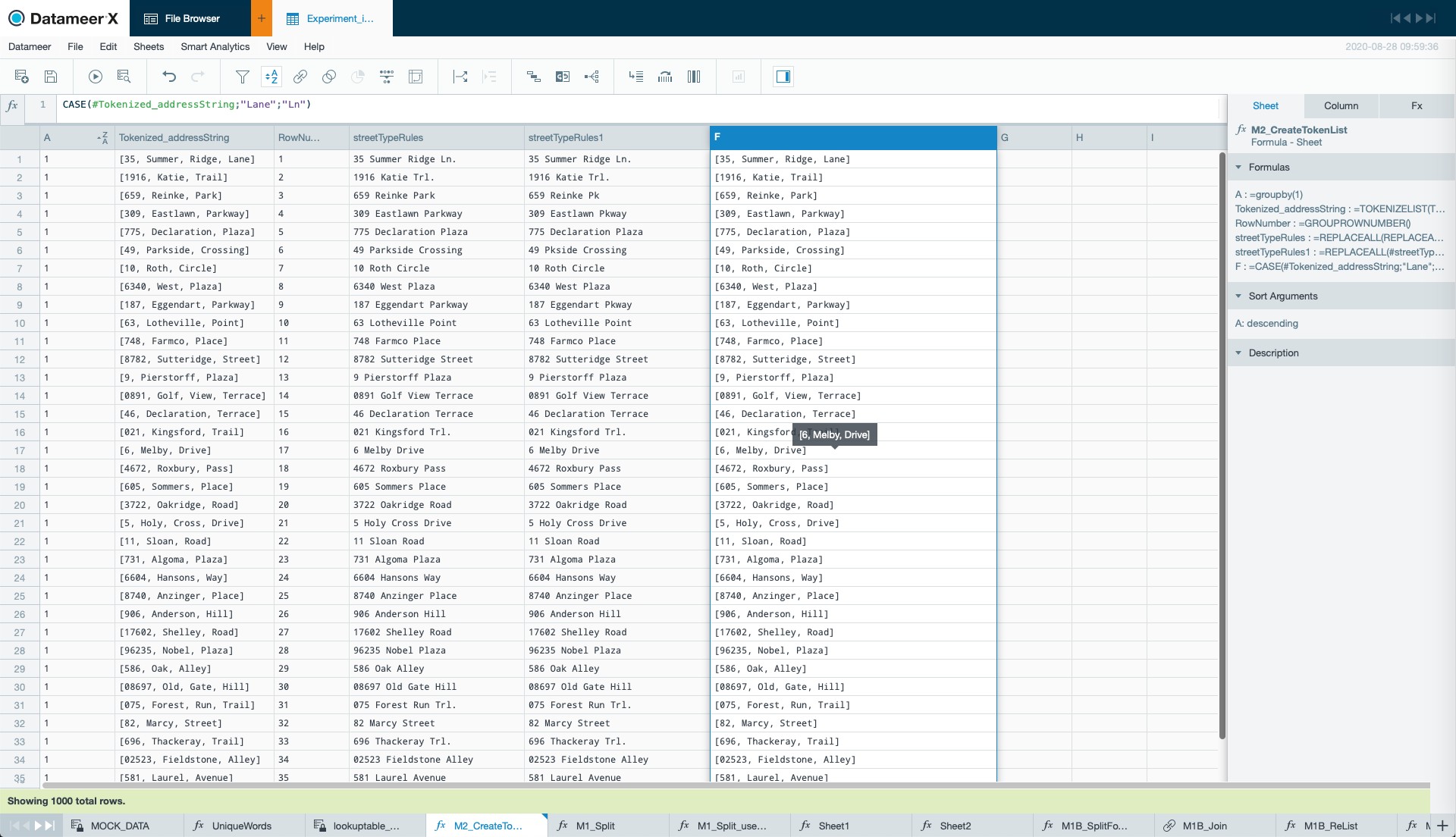
The existing platform: a spreadsheet over big data, with formulas, an inspector for every sheet and many sheets per workbook. From a 2020 design file of the product.
Many of them worked at top banks and insurers in the US, Canada and the UK. Design's part in building those screens was execution.
Buying software did not mean using it
Datameer's bank and insurer customers had bought the platform. Buying software did not mean using it. It is the same pattern I see with AI today.
This study is about the part that comes before use: who gets to decide what the product will be, and how research and design came to be part of that decision.
The users were hard to reach, and the company was changing course
Research with these users meant working around access limits, because banking and insurance are regulated industries. By default, design also sat apart from sales, with occasional sales support.
Then the company's course changed. Datameer kept its existing product and business, but it saw the market shifting and wanted to launch a new product that met new market demands.
The new product needed research and design where it was decided
The new product needed research and design in the room where it was decided. That is what changed design's role. Research got budget and executive support, design entered roadmap conversations, and the design system got built.
I led design and user research for the new collaborative data platform, built from scratch, from concept through to product release.
One problem from that work: a preview that came back empty
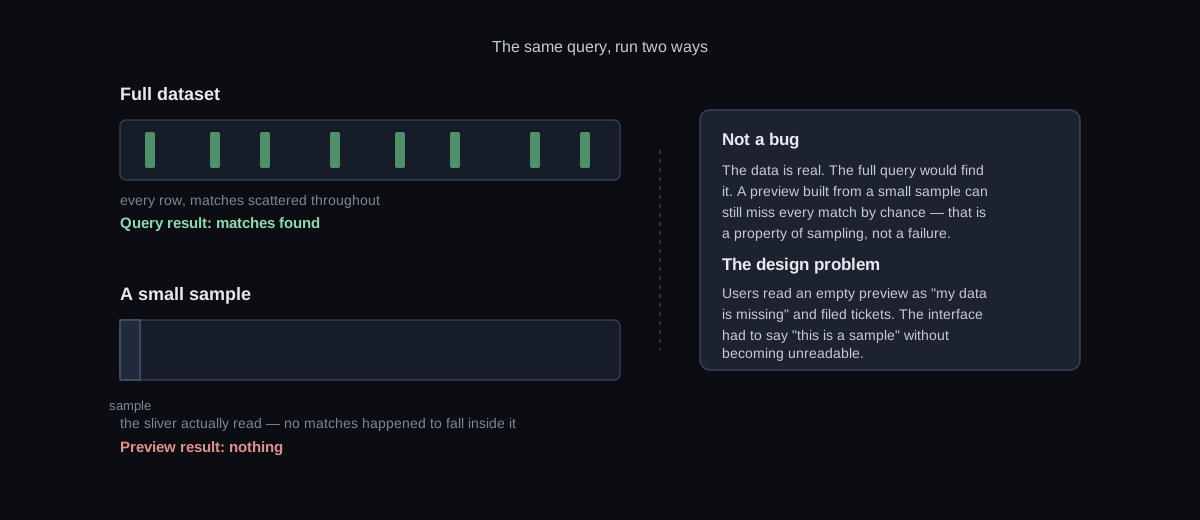
Big data analytics ran on sampling. A query builder preview could show empty results even when the full data held matches.
 View full size ↗
Why a sampled preview can report nothing while the data is there.
I experimented with different sampling approaches and user feedback mechanisms. The design that solved it gave visual and text feedback on sampling status, so users understood the limits of a preview against the results of the full query.
Design in the roadmap conversations, and a design system to build with
The record of the change is the sequence: a new product bet, research with budget and executive support, design in the roadmap conversations, and a design system that got built.
- Design's role
- Execution-focused function Strategic business partner, in the roadmap conversations
- User research
- Budget and executive support; in person with US customers, a research trip with sales, and remote screening on usertesting.com
- The new platform
- Design and user research led from concept through to product release
- Design system
- Co-built, with components such as data-table column headers and inspector panels; I led its implementation across the design team and engineering
The charts and pivot tables stayed dense
The screens were still column charts, pivot tables and result cards for people who knew their data. What changed sat upstream of them.
Research with the people using the platform had executive support, and design sat in the conversations where the roadmap was set.
Getting design into the roadmap conversation
-
Tie research to the bet your company is already making.
At Datameer, executive support for research came with a new product bet. Name the decision on your roadmap that research would change. If you can't, the request for budget isn't ready.
-
Give every hard-to-reach user a route.
Regulated customers limit access, so one method rarely covers everyone. List your personas and the route to each: in person, alongside sales, or remote screening.
-
Track which decisions design is part of.
Write down which roadmap conversations design is in today, and which decisions research has fed. Review the list each quarter.
A settled roadmap needs a different argument
This path depended on a company deciding something new. Where the product and the roadmap are settled, research has no open decision to attach to, and the case for executive support has to rest on something else, such as the cost of a problem you can already see.
Want to hear more?
- Bring me the product decision your company is about to make, and the users nobody on the team has watched at work yet. We can work out how to reach them before the roadmap is set.