When 'Simple Booking' Isn't Simple
ChurchDesk Booking System
Designing a deceptively simple booking experience that masks extraordinary complexity: multiple stakeholders, rotating schedules, cemetery opening hours, and the emotional weight of funeral planning.
- 70%
- Less coordination time
- 90%
- Booking acceptance
- Every
- Customer on the platform
The Challenge
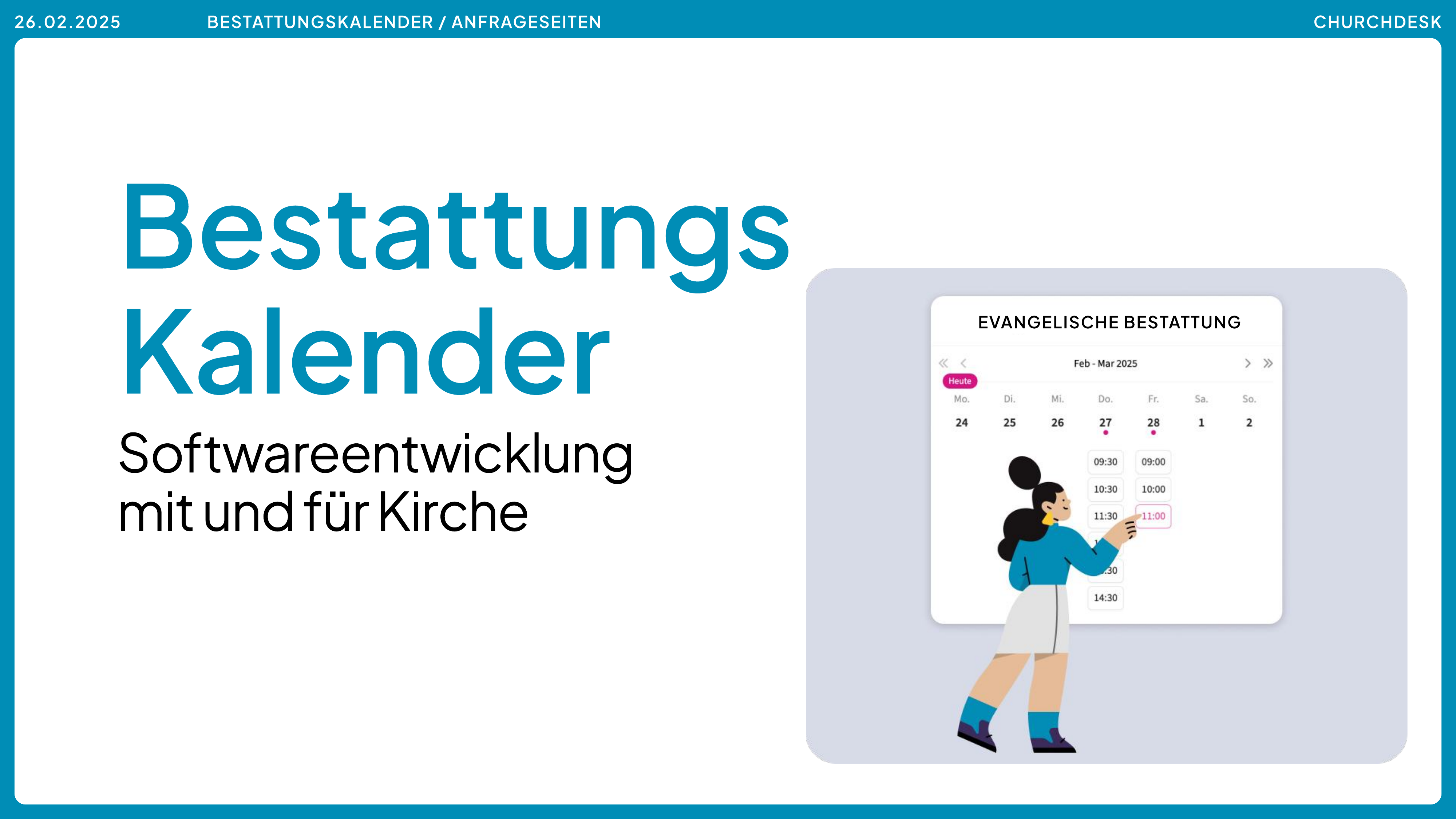
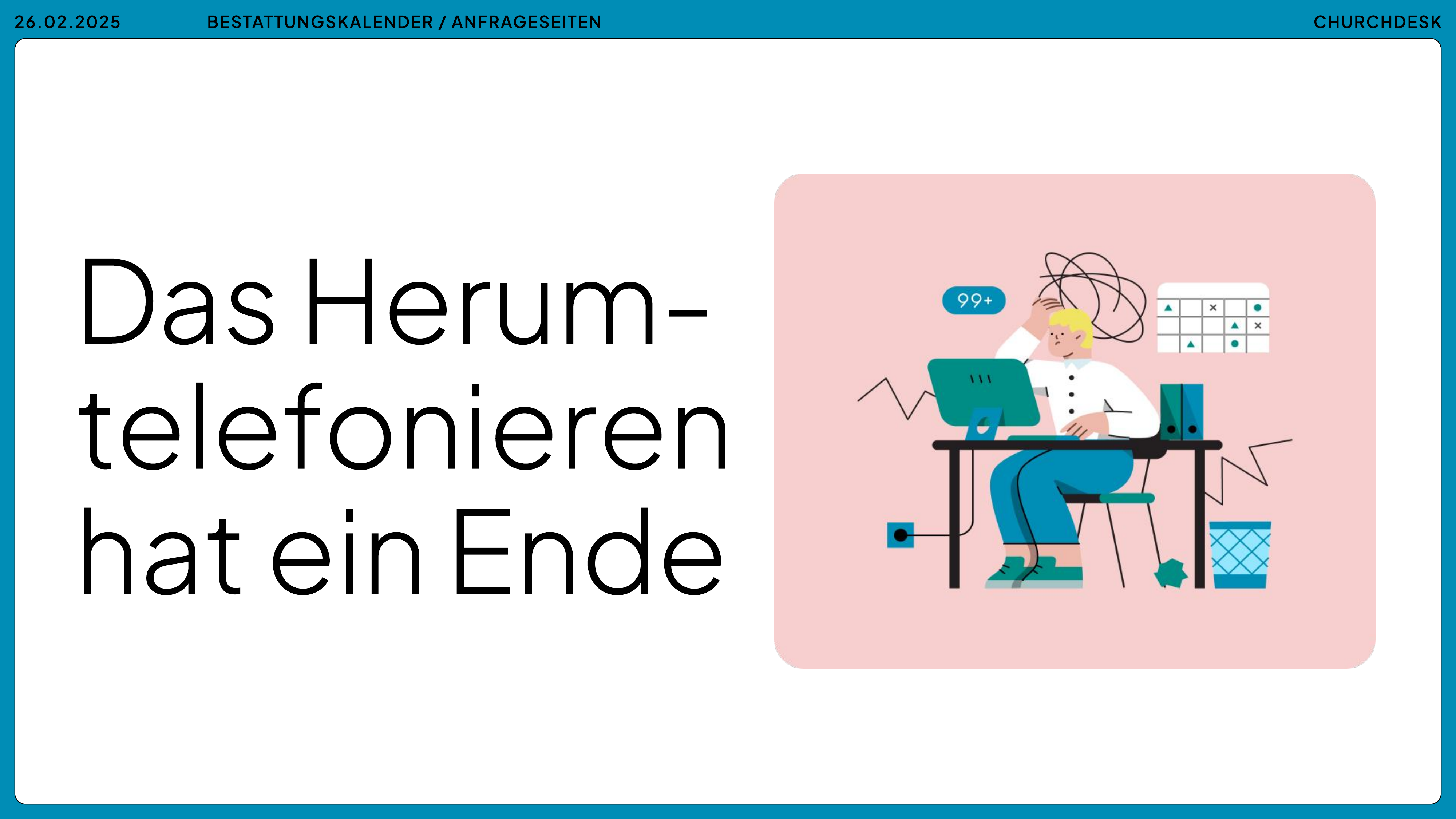
ChurchDesk is a vertical ERP for churches and dioceses. Funeral homes need to coordinate with parishes to book a priest for funeral services. That coordination runs between funeral home, parish office and priest, and it takes extensive back-and-forth. For bereaved families, every additional phone call adds to an already draining experience.
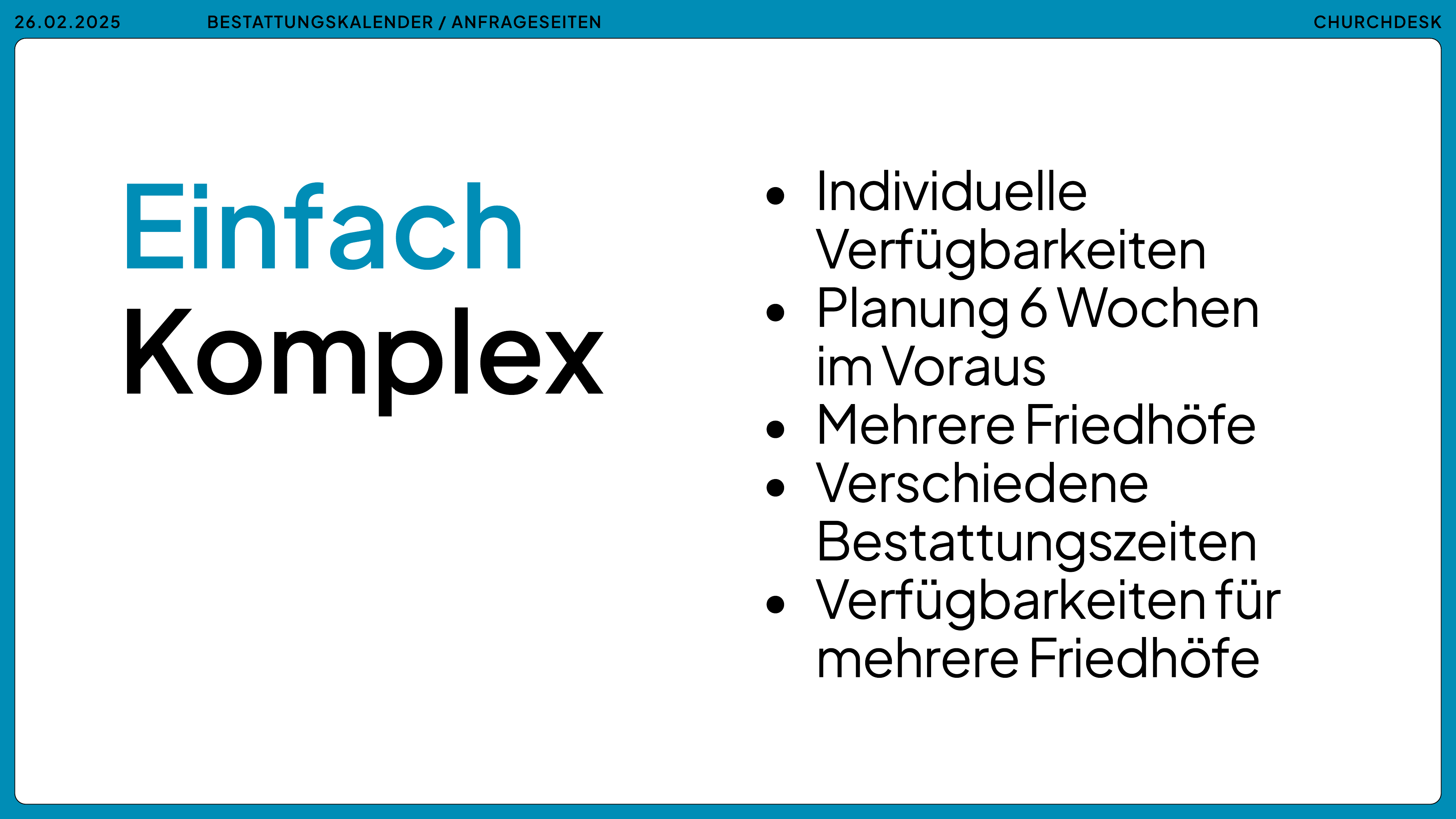
The complexity runs deep: priests take turns on-call but have preferences or commitments to specific cemeteries. Teams of priests plan their availability 6 weeks into the future. Each cemetery has different opening hours. And beyond funerals, ChurchDesk wanted to cover more booking use cases like room rentals.
The Design Tension
We faced a fundamental UX paradox:
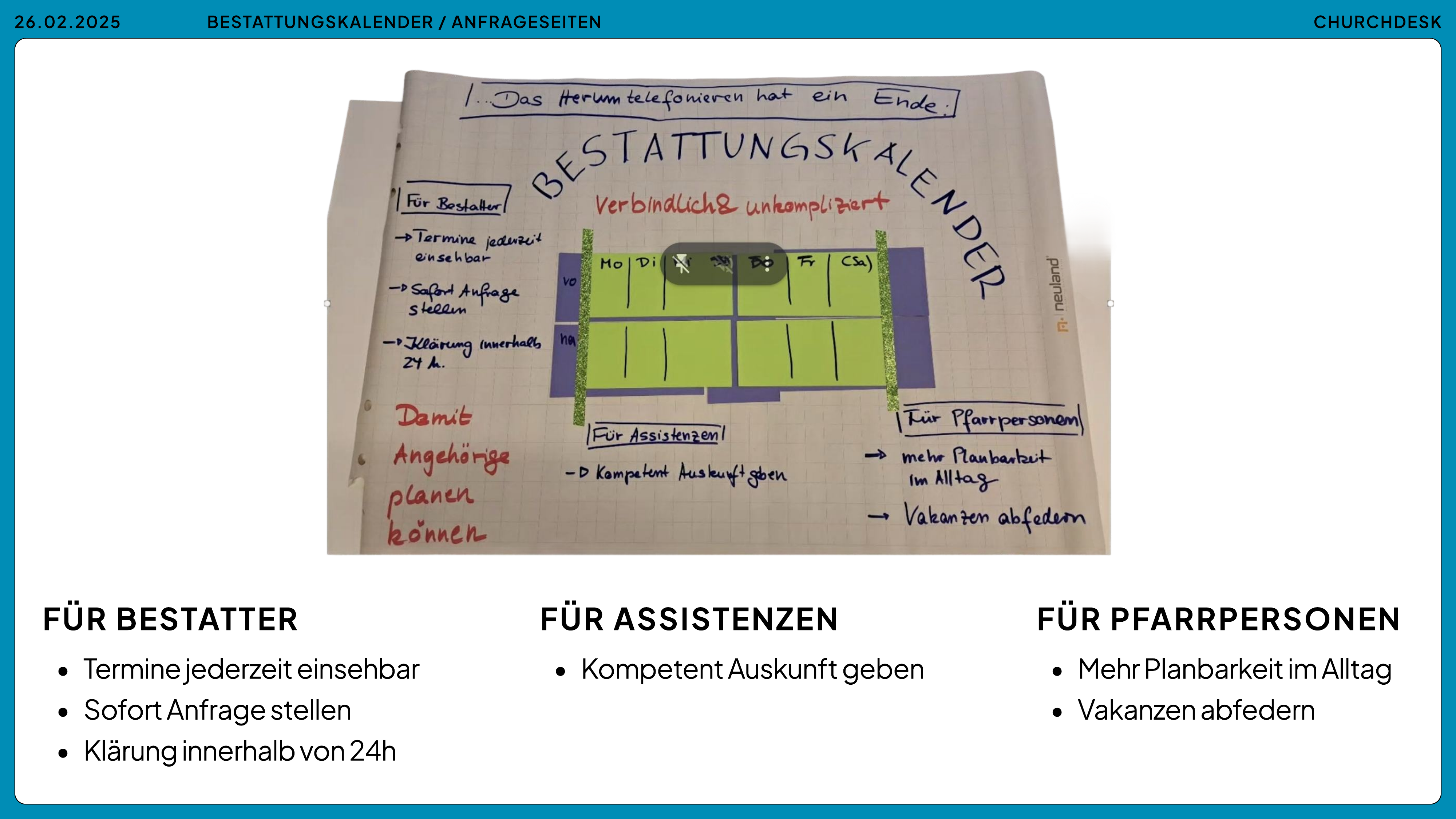
For Funeral Homes
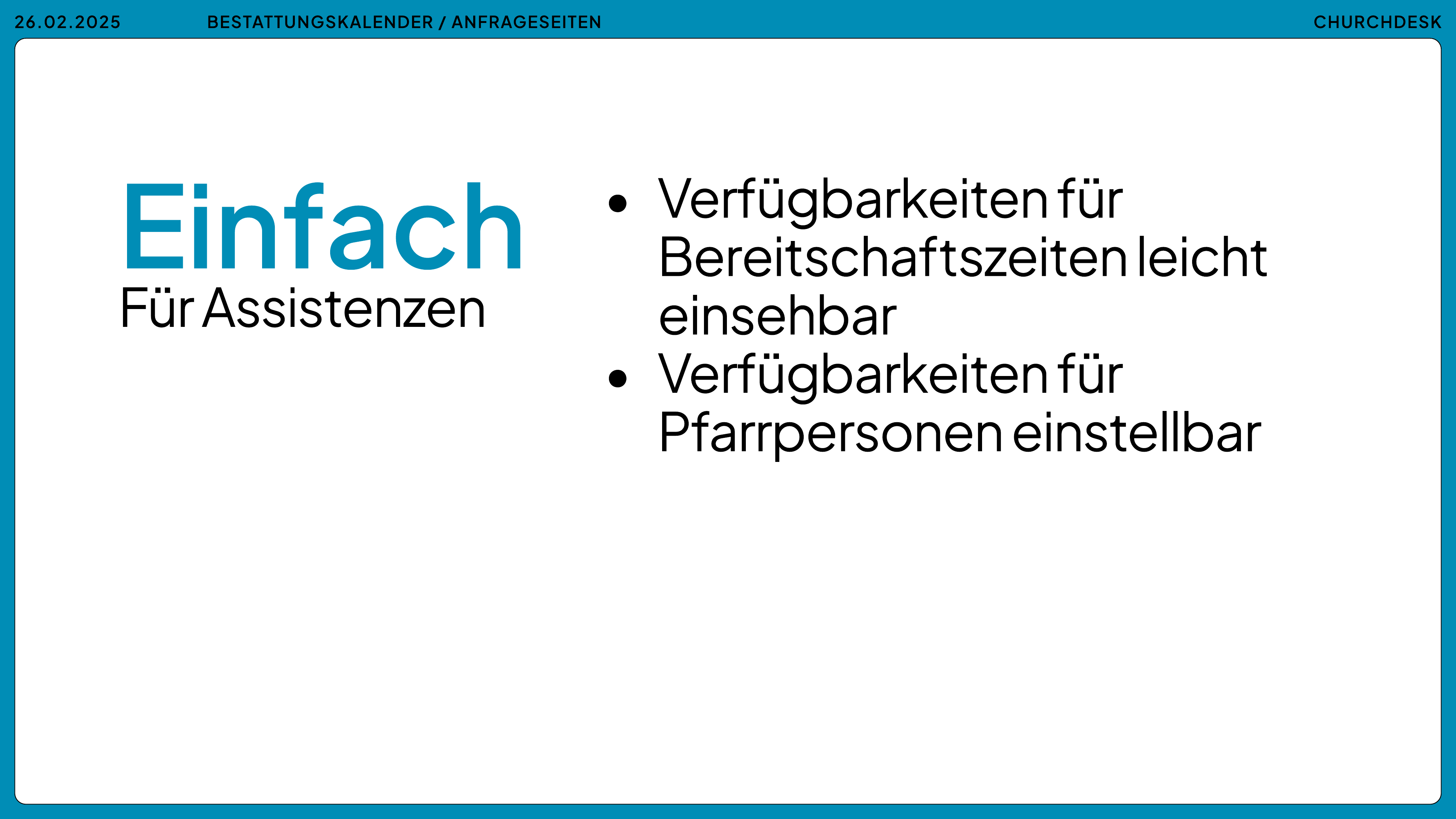
Should feel like booking a priest: simple, fast, reliable. Select a time, get confirmation, done.
For Priests
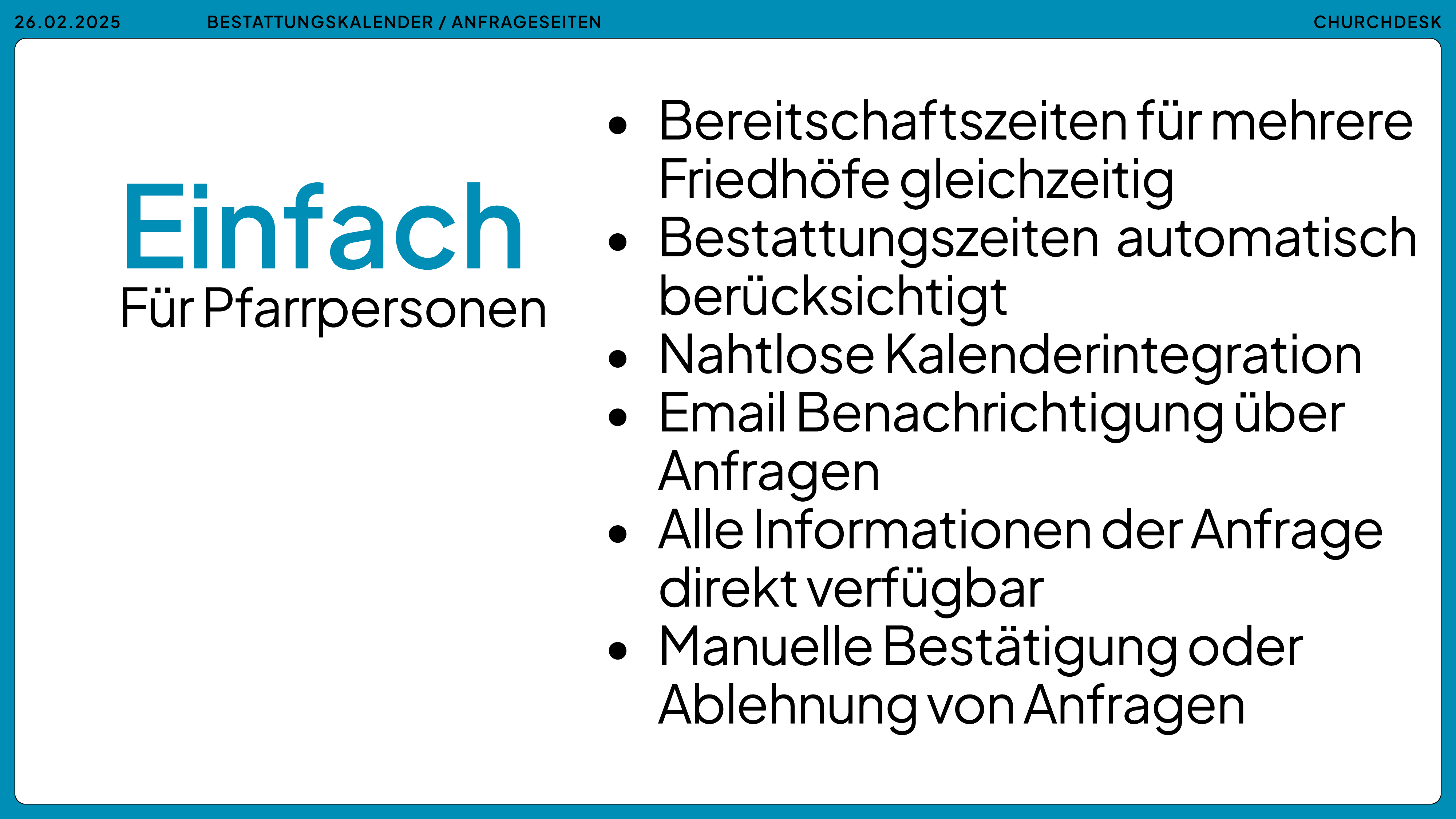
Should NOT feel like being booked. Maintain autonomy and control over their own schedules. Service mentality, not service industry.
These opposing needs required careful system design to satisfy both perspectives simultaneously.
The Solution Architecture
ChurchDesk already had a calendar with people and resource association for events. We extended this foundation with a new concept:
- Availability as Event Type — A new event type that could be associated with booking pages
- Multi-Option Availability — Priests could make themselves available for multiple booking options (e.g., different cemeteries) in one action
- Recurring Events Integration — Reused the existing recurring-events system for simple on-call schedule creation
- Cemetery Hours Overlay — Each cemetery's opening hours factored into availability calculation
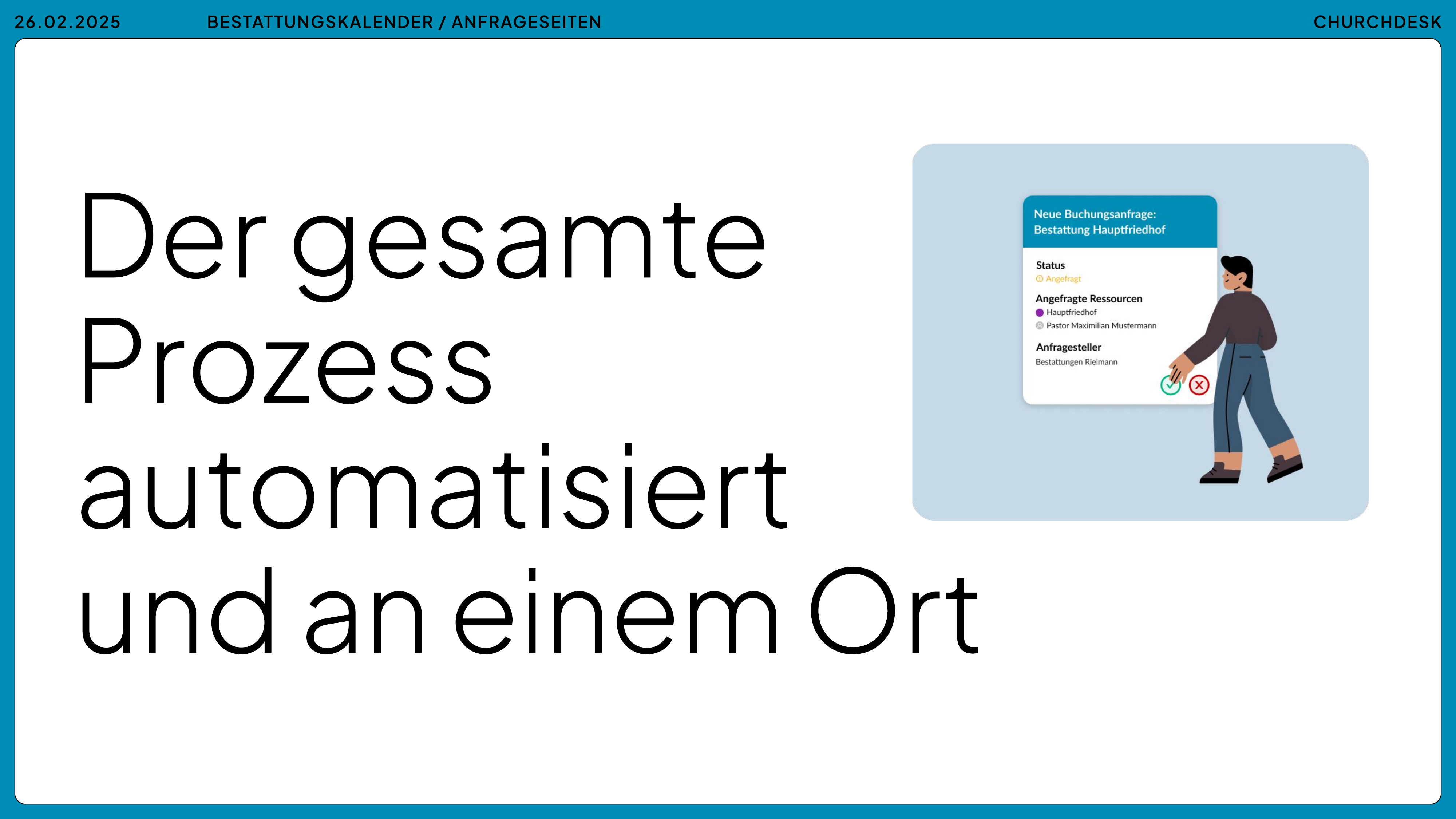
- Request-Based Booking — Bookings presented as requests/enquiries that priests confirm or reject
Complexity Made Simple
The result: end-users (funeral homes) got a simple booking experience. Priests got simple availability management, which is especially powerful with recurring events. And everyone maintained appropriate control and visibility.
Technical Implementation
Engineering built it on React for web and React Native for mobile, extending ChurchDesk's existing platform. I did the design and the product decisions; they wrote the code:
- Calendar System Extension — New availability event type integrated with existing calendar infrastructure
- Booking Page Generator — Dynamic pages based on availability and cemetery constraints
- Smart Filtering — Automatic matching of priest preferences to cemetery requirements
- GDPR+ Compliance — Privacy-first design for sensitive personal and religious data
Design Decisions
Request vs. Booking Language
To preserve priest autonomy, we framed all bookings as "requests" or "enquiries" that require confirmation. This small language shift maintained the service mentality while giving priests genuine control.
Unified Availability Model
Rather than building separate systems for funerals, room rentals, and other use cases, we designed a flexible availability model that scales to any booking scenario. A platform investment rather than a feature.
Progressive Disclosure
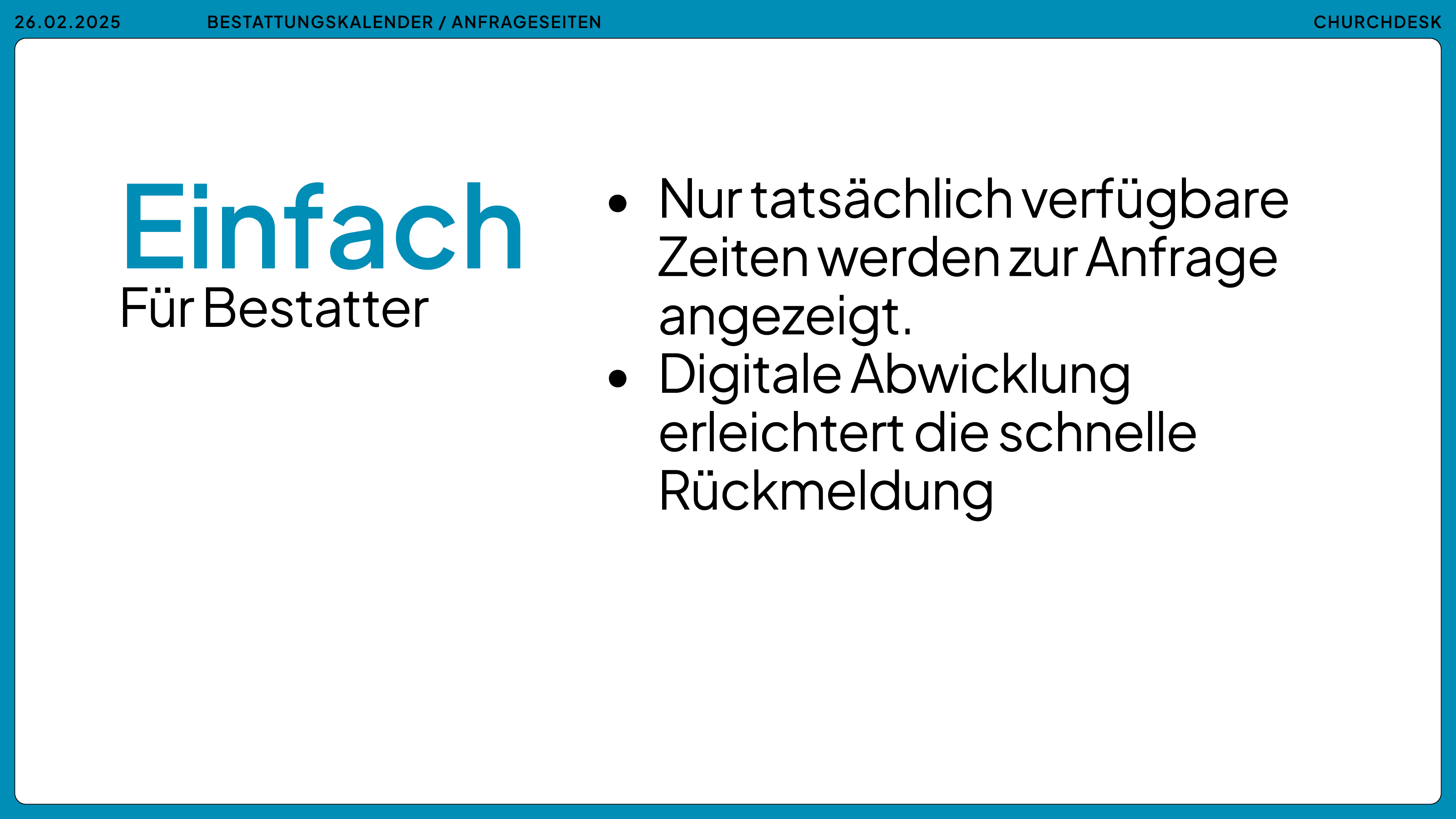
Funeral homes see only what they need: available times. The underlying complexity of rotating schedules, cemetery hours, and priest preferences stays invisible.
Impact
Coordination time fell by 70%. Days of phone calls became hours. Smart filtering that surfaced only genuinely available options produced a 90% booking acceptance rate, and the launch customer could take funeral bookings for and by 20+ cemeteries in the Hessen region, and the module shipped to the whole customer base. Most importantly, it became a core platform feature, and the availability model now powers use cases well beyond the original funeral scheduling need.